EXCLUSIVE INTERVIEW: ADAM COOPER ON 'SLEEPING DOGS'
Interview by Michael J. Lee, Executive Editor for RadioFree.com
February 29, 2024
A former investigator suffering from memory loss unearths a case with ties to his own fractured past in the mystery crime thriller Sleeping Dogs.
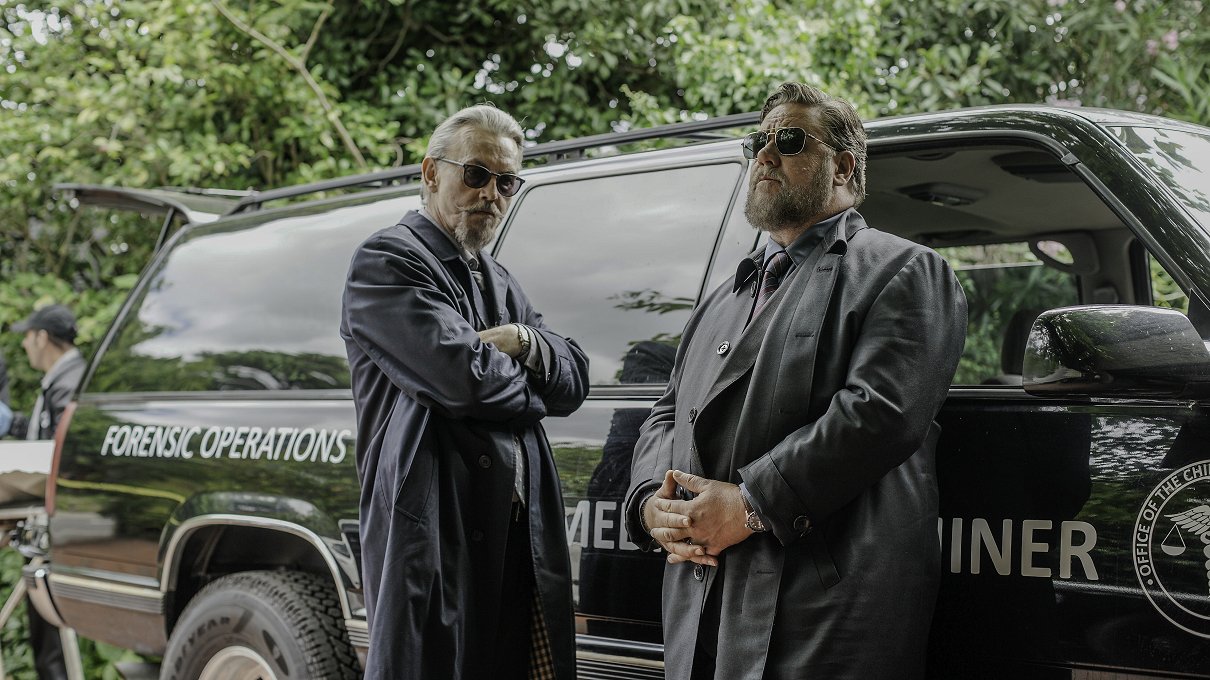
When a man that he apprehended faces his final days on death row, retired homicide detective Roy Freeman (Russell Crowe) revisits the brutal murder case from ten years prior. But saddled with the passage of time and early onset Alzheimer's, the once dogged sleuth struggles to piece together a coherent record of the events that transpired, and along the way, discovers that he may have a more personal connection to the crime than he ever suspected.
Based on the novel The Book of Mirrors by E.O. Chirovici, Sleeping Dogs is the directorial debut from screenwriter Adam Cooper, whose past work has featured action-oriented fare such as Exodus: Gods and Kings, The Transporter Refueled, Allegiant, and Assassin's Creed. The cast also includes Karen Gillan, Harry Greenwood, Tommy Flanagan, and Marton Csokas.
In this exclusive interview, writer/director Adam Cooper talks about adapting a slow burn mystery thriller and refocusing the story through the perspective of a character whose very perceptions are called into question.
Sleeping Dogs is now playing in select theaters, and available for pre-order on digital platforms including Amazon.
|

|
|
RadioFree.com: How did the experience of adapting a psychological thriller like Sleeping Dogs compare to adapting more action-oriented properties like Allegiant and Assassin's Creed?
ADAM: It was a different adaptation in that I think in a lot of the adaptations that I've been a part of, more of the elements of those original works found their way into the finished screenplay. In this, the underlying mystery of a college professor having been murdered and the triangle of Laura and Richard were part of the book. But the lens through which that story was told is very different in the film. The book is sort of siloed. The narrative is told by three different characters: first a New York lit manager, then a New York-based investigative journalist, and then finally a homicide detective with early onset Alzheimer's, who, 25 years ago, is responsible for [incarcerating] the person who's in jail. But we reframed the telling of the story fully through the lens of a character who doesn't appear until the third installment of the novel. So I think it was a different kind of challenge because endeavoring to reframe the entire narrative through this character required doing some things differently with some of the specific elements of that narrative. So it was a fantastic jumping-off point, particularly as it related to elements that transpired in the past. The present day machinations of the plot are very different once they're re-lensed through Russell's character.
Of the three central characters in the book, what made you select the homicide detective as the focus for the film?
The other two characters...It felt like they didn't have as much at stake, right? They were kind of exploring it from 30,000 feet. They weren't integrally involved in what had transpired all those years ago in the same way that the homicide detective character was. They didn't have culpability. The homicide detective is responsible for arresting the person who is on death row for the murder. And then also, this idea of memory and a view that there can be many different truths to events in the past because our memory of things is oftentimes not an accurate recollection of what transpired...Exploring those themes through the lens of a character who is himself bereft in memory felt like an interesting way to tell a story in the suspense, drama, psychological thriller genre.
|
|
|
You have the luxury of two great leads in Russell Crowe and Karen Gillan. What did they bring to their characters that, perhaps, you hadn't seen in the script?
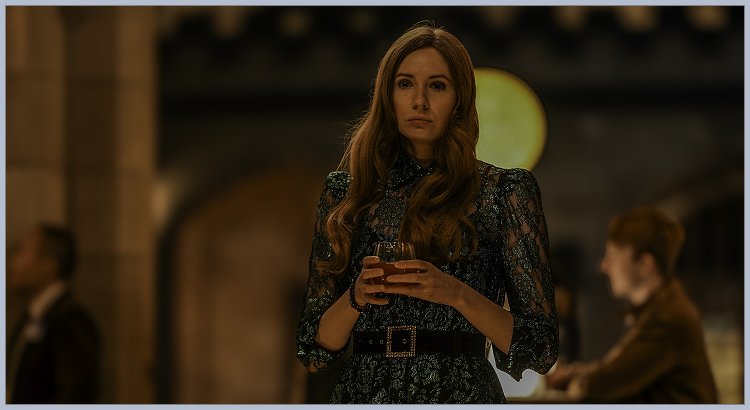
I think Russell brought a deep inner life and subtlety to the performance. I think another actor might have been "bigger," you know? But he brought an understated kind of quiet to it. And I feel like Karen sold the duplicity of her character in a way that I never could have expected. I mean, without giving away too much, she is basically playing two parts. And maybe as the writer and director, the fact that I know that gave me a different kind of subjective point of view on her performance. But I feel like she plays the femme fatale in a way that's not ostentatious. It's complex and intense, and it just makes you raise an eyebrow. She plays it with an intangibility that I can't really explain.
I would imagine that editing was a critical aspect of presenting the mystery of this story. Once everything had been shot, how did you tackle that task of putting all the pieces together?
Well, I had one of the world's best editors. My editor was a guy named Matt Villa, who was nominated for an Academy Award for Elvis, and he is a frequent Baz Luhrmann collaborator. And I learned firsthand that when you're making a movie, you get to tell the story three times: when you write it, when you shoot it, and when you put it together. And I think the most fun part of the process was post-production--putting it together, how we dealt with memory, how you can make something that wasn't as visceral in the shooting feel more visceral in the edit. It was always, though, about sort of couching the viewer's experience in Roy's experience--you know, making sure that we were telling the story in such a way that you're kind of in lockstep with Roy as he's unraveling this narrative. There was an iteration where the cold open of the movie was the murder. But the problem with that choice is that it put the viewer ahead of a character who's having memory issues, so you know something that your character doesn't have. So I think a big thing that came out in the post-production process was really telling the story as Russell's character is experiencing the story, and that was with a lot of help from Matt Villa.
As someone with a lot of experience writing action films, was it challenging to shift gears and work on a project that relied so heavily on dialogue, as opposed to more visual elements like explosions and action choreography?
I find the action choreography more difficult, honestly. Or at least writing it, because I think it requires a lot of abstract thinking. It stops being about "goal action obstacle" as it relates to one character wanting something from another character in a scene. When you're writing action, you're always looking to sort of trump it with the next best two sentences that explain that action. But there's a practicality around writing action, where you don't know what you can and can't actually get away with doing, whereas when you just have two people in a scene talking to each other where one wants one thing and one wants something else...I find the nature of writing that kind of conflict more interesting for me as a writer.
Thank you for your time today, it's been great speaking with you.
Thanks for watching the film and for talking to me.
|
|

|

Interview: Will Smith on Gemini Man

Interview: Holland Roden on 'No Escape'

Preview: The New Mutants
|