EXCLUSIVE INTERVIEW: RAYMOND ST-JEAN ON 'DUSK FOR A HITMAN'
Interview by Michael J. Lee, Executive Editor for RadioFree.com
April 10, 2024
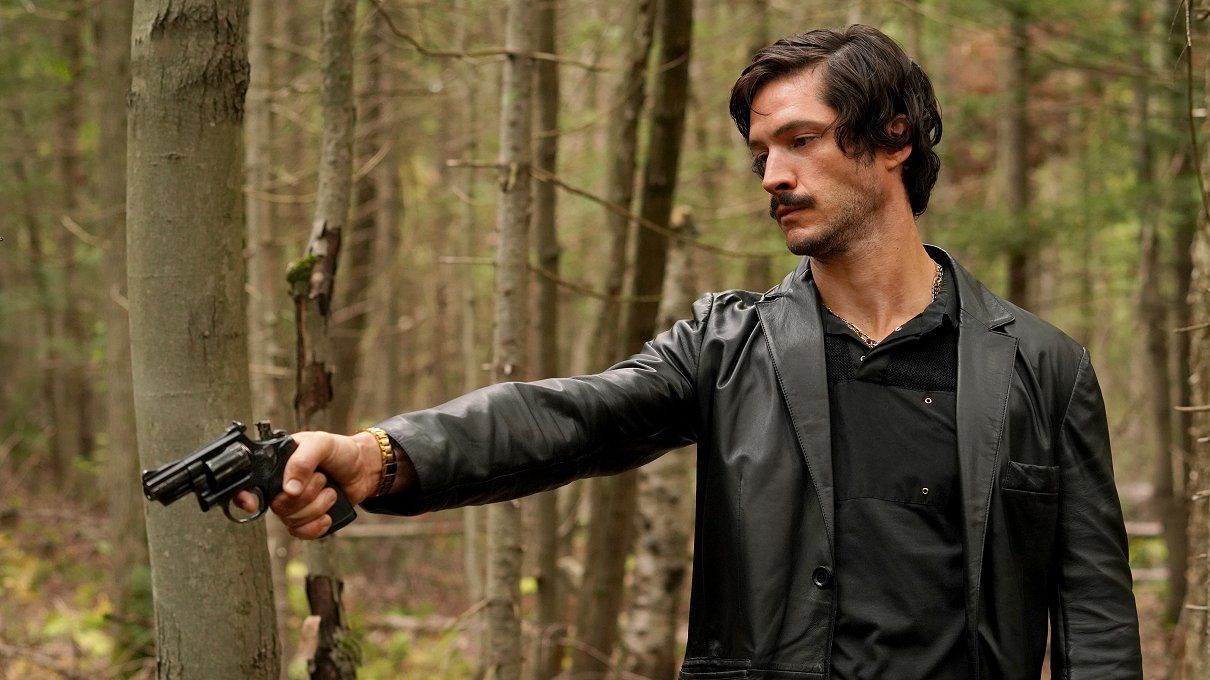
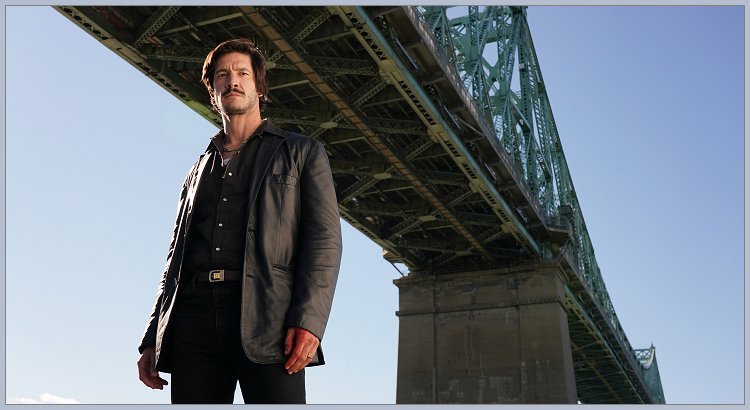
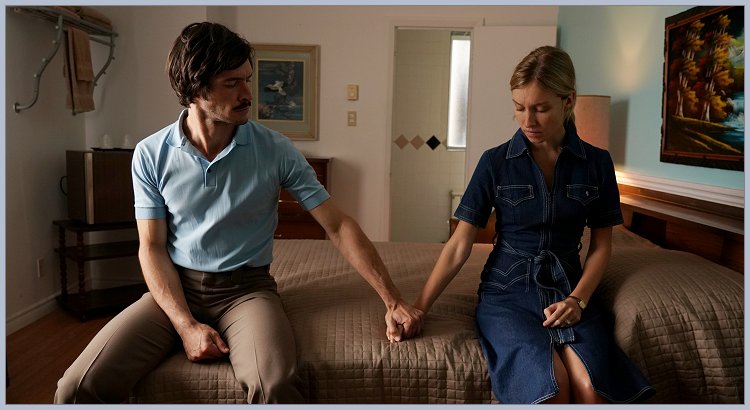
Based on the real-life story of enforcer and assassin Donald Lavoie (Eric Bruneau), Dusk for a Hitman follows the title protagonist's career in organized crime, his capture by authorities, and his eventual decision to testify against Claude Dubois (Benoit Gouin), the head of a notorious gang operating with impunity for decades in Montreal. Along the way, his loyalties to an estranged partner (Rose-Marie Perreault) and a ne'er-do-well brother (Simon Landry-Desy) are tested, even as his own life hangs in the balance.
In this exclusive interview, director Raymond St-Jean talks about his experience of adapting a true crime story into a feature dramatization, the impact of his background with documentary filmmaking, and the level of research necessary to balance historical facts with an entertaining character study.
Dusk for a Hitman is available on VOD and digital platforms including Amazon and Google Play.
|

|
|
RadioFree.com: When were you first familiarized with the story of Donald Lavoie, and what made you want to adapt that story into a feature film?
RAYMOND: I was acquainted [with] him a long, long time ago, when I was in my 20s. The story was actually happening at the time around me, there were articles in the newspaper. It wasn't big news, but the Dubois family and Donald Lavoie were in the public space at the time. When he became a witness, things came out, and everything went public. So there was material around, which I was very interested [in]. And I was also, at the time, a big fan of American gangster movies. So all this was the start of it. And a few years ago, I directed mainly documentaries, and I wanted to do feature drama. So I needed to find a subject that I could hold on [to] for years--you know, it's so long to make a film--something that would motivate me to just fight my way along and make this film. So then I met Martin Girard, the co-screenwriter, and we started playing with this idea of doing a film around Donald Lavoie. It's a film that, like they say, wanted to be made. The story of the Dubois family spans decades, and it's from the '50s to the '80s. It's not our Al Capone, but every culture has these criminal figures in the past that they want to tell stories about. You find that everywhere. He was such a fascinating character, so it's easy to make a film about him.
Was it challenging to switch gears from documentaries to dramatizations?
I made a few shorts, and I made some dramas in my life. It wasn't my first, but as a feature film, the project of that magnitude, for me, was totally new. I'm a big cinephile, I watch a lot of movies. And I always wanted to do feature films, [even] before documentaries happened in my life. So it's [an opportunity], and it wasn't difficult, actually. [laughs] It wasn't that difficult!
|
|
|
How did your extensive background in documentary filmmaking impact your approach to this project?
One thing I brought from the documentaries is a way of looking at things, maybe. Maybe I wasn't conscious of it, but I brought that in my way of filming, I think--being more patient, looking at things, not trying to be the show but observing the show in front of me. Sometimes directors go crazy about their signature and trying to impose a style through the movie. I was more looking at the film and trying to recreate reality. I got obsessed with making it right, as real as possible. So I guess that was the idea of realism, but still being entertaining. That's where my background as a documentary filmmaker and this interest in entertainment came together, to make something that looks very real but still is entertaining.
What type of research is necessary in telling this type of story? Is it just a matter of going through publicly available material, or do you have to dive deeper into sources such as police files?
Well, I think there are different ways, and they're all good. First thing you have to keep in mind is you're doing a drama. It's fiction. When you try to stick too much to reality, people can give you different versions of reality, [and] you may get bogged down into things that are maybe not that important. You tell a story, it has to be your own story. And you're dealing with a character that is not Churchill, or Ronald Reagan. I think it gives you leeway, lots of freedom, to imagine what they were. And there's also the fact [of], "What can you have as sources?" And what we could have were archives from newspapers, a few books, some interviews he gave. And from there, we tried to tell his story, but a story from his point of view. It's more psychological. It's a human drama, it's a character drama. It's his psychology that counts for us. So that's what we use.
|
|
|
Did you meet with any of the subjects of the film?
We couldn't really meet the characters at the time, they were underground or hiding. And actually, we didn't really want to meet them, because basically our first take was "They're all extreme narcissists, so how much can you trust them?" For us, Donald was someone who used people, essentially. I had a critic saying, "All the secondary characters are not developed well." For me, it's Donald's point of view. He's using people around him, they're not that important. What counts is him. And his wife tells him, "You did it for yourself." Like the character in Breaking Bad, his wife tells him that he's always obsessed by "I did it for you, I did it for you." And she says, "No, you did it for yourself." And I think these people do things for themselves--make money, get power, save their skin. That's their motivation. So that's why we tried to imagine what was going on in his mind, and tell the story of a complex character--charismatic man, intelligent, brilliant, but also wrong in everything he does. All the choices he makes are wrong, and he's twisted in some way, and he lacks empathy. He has no empathy. That's why he goes to the extreme [to which] he goes. People around him are things, essentially, to get rid of or to use. And we don't need to meet him to tell that story, I think.
I understand you previously worked on the Cirque du Soleil production Michael Jackson: One at Mandalay Bay in Las Vegas. How does a creative endeavor like that compare to directing a feature?
Well, first let's say it's a huge collective work. It's a very different kind of work. I was part of a team. When you direct a feature film, you're the master architect of the thing. But there, I was part of the team doing my part on a very long, long, long, long process where things changed very much. So it's different. You can't compare the processes, actually. It's like being an architect of a home and selling furniture in a store that will go in a home. It's two [completely different] things! [laughs]
Thanks very much for your time today, Raymond, I appreciate it!
Oh, thank you, thank you! Nice to meet you.
|
|

|

Interview: Madison Iseman on Nocturne, Clouds

Interview: Holland Roden on 'No Escape'

Preview: The New Mutants
|