|
RadioFree.com: This film competition seems different from most others in that participants are adapting a short script you've written as opposed to creating their own from scratch...
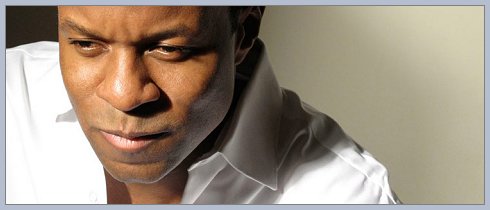
GEOFFREY: Yes. One of the things that I love about it is there's certainly structure there--it's based on a script that's stripped of any information about location or character description--and it also leaves an enormous amount [open to interpretation and] direction. So really, each one of these [entries] should be very, very different from each other. And we're very curious to see what people do within that very skeletal framework, and to see what patterns and trends there are throughout the world. Maybe there are things in the zeitgeist that we'll discover. But it gives such freedom that we really do feel that we'll see the filmmaker in these--we'll see the storyteller in their work.
What attracted you to this project?
One of the reasons why I was so thrilled to be a part of it is because the philosophy of this competition--the philosophy of Bombay Sapphire--is one that believes very strongly in imagination and opportunity. And coincidentally, years ago, I was teaching at Columbia and created a [project] based on a very, very similar philosophy. It was a different script altogether, but it was one that was stripped of description and directions and locations. Another uncanny similarity--or should I say, a bit of coincidence--is that for years, when I took odd jobs outside the film industry, I would create short films and write feature scripts in the free time that I had. And this program is for budding filmmakers and everyday people who might have a so-called "everyday job," but may want to indulge their imagination and express themselves, which certainly sustained me through many years. And what we hope is that perhaps we'll find somebody remarkably gifted whose work might not have otherwise been discovered, but perhaps someone will be inspired to keep creativity as part of his or her life and inspire others to do the same.
Do you feel that opportunities like this were readily available when you were coming up as an aspiring filmmaker?
I think it's happening more in recent years, and it's because of the internet. There were some festivals back then, too, but they were still very few of them. So this is something unique. And I believe that there's a great deal of talent everywhere, but not necessarily as much opportunity. So hopefully, this will be an opportunity for people to get their work out there. But again, on another level, just the thought of someone who might not have otherwise decided to create something decide to do so [is gratifying].
As someone who has obviously had great success with adapting another writer's story with Precious, what do you think is important for filmmakers to keep in mind when they are interpreting your short script for this competition?
Well, in the case of Precious, for me, it was so important to keep the spirit of the book, but there were a lot of leaps in various directions. And one of the things that excited me was taking these enormous leaps outside the book, but keeping them within the spirit and the universe of the book. And the book, the script, and the film are three different creatures who share the same spirit. In this case, there's a lot more room for people to take leaps and to create their own spirit--install their own spirit--into the framework there. And that's one thing that I'm really, really proud of. I believe the structure can be helpful, but I do love the license to explore and be daring. And hopefully this script allows for that.
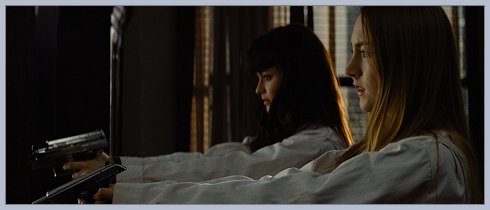
I've been looking forward to your directorial debut Violet and Daisy ever since Saoirse Ronan described the title characters' offbeat motivations to us at WonderCon last year. Did you come up with that story after finishing Precious, or was it an idea that's been with you for a long time?
I think the seed of it came to me before I wrote the script for Precious, but the first draft was written after the script for Precious was completed and before the film came out. And I'm crazy about it. You know, the few people who have seen it so far have connected to it so powerfully that it's been humbling. And I am so curious to see how others will think of it. But I'm quite proud of it, and everybody involved really embraced the universe and did, in my opinion, some of their most remarkable work they've ever done. There's a lot going on in the movie. I think on the surface, it may look like one thing, but a lot of things are sort of unveiled, and it starts and ends in very, very, very different places.
When you're writing characters like Violet and Daisy, do you view them as different aspects of your own personality? Or does one represent your outlook while the other is the antithesis?
You know, lead and supporting characters are fascinating, and I do think that I have a very specific relationship with each one. One character might be the person I want to be, another character might be the person I'm afraid that I am... [laughs] Another character might be the person I think I am. And a lot of times, these supporting characters, I feel, are almost written with a different part of my brain--they sort of just seem to come right out in this organic way when they're working well. That's a very good question. No one's ever asked me before, but I think about it all the time.
When actors bring your characters to life on screen, they're sort of doing their own adaptation of your story. What do you think Alexis and Saoirse brought to Violet and Daisy that you, perhaps, didn't see while you were writing them?
I always thought the characters were endearing, but they certainly made them more so. And each of these characters, throughout the course of the film, go to so many different places. And the humor and the vulnerability that they brought made these characters even more dimensional to me. And their passion for the project and the passion they bring to their work as artists...It's amazing. Every actor in it--James Gandolfini's in it as well, Marianne Jean-Baptiste, Danny Trejo, Tatiana Maslany, Lynda Gravatt--brought so much to it that it's hard to picture anybody else in those roles. And I do think that that's one of the great things one can say about an actor.
Thanks very much for your time this afternoon. I really appreciate it.
Oh, my pleasure...Bye-bye.
|





